
Learning how to season firewood comes down to one number and a few habits. The number is moisture content: firewood should read 20% or lower before it goes in the stove. The habits are splitting the wood, stacking it off the ground where sun and wind can reach it and covering the top. Handled that way, most species are ready in 6-12 months, and oak and other dense hardwoods take longer.
Most seasoning advice starts at the woodpile, but the step that sets the pace comes before it. Bark holds moisture in, and a long log has very little exposed end grain for its size, so wood left in logs or unsplit rounds dries slowly. Seasoning picks up once the wood is cut to length and split. The sooner a season's supply gets split, the sooner it's ready to burn, and that's where More Output, Less Time, Less Labor matters for anyone heating with firewood.
How Dry Should Firewood Be?
Firewood should be at 20% moisture content or lower when it's burned. Freshly cut wood often starts at 40-50% or higher, so most of seasoning is waiting for that number to come down.
Burning wet firewood causes three problems:
- The fire spends energy boiling off water before any of it reaches the house.
- The fire burns cooler and smokier.
- That cooler smoke also condenses in the chimney as creosote, which builds faster with wet wood and raises the risk of a chimney fire.
Seasoned wood lights easier, burns hotter and leaves less in the flue. Our Ultimate Guide to Burning Firewood covers the rest of what goes into heating with wood.
How to Tell if Firewood Is Seasoned
A moisture meter is the only reliable test. Split a piece from the middle of the stack and press the pins into the fresh face with the grain. A reading taken on the outside of a split will come in drier than the wood inside it. Under 20% is ready.
Without a meter, a few signs point the same direction: cracks running out from the center on the cut ends, wood that feels light for its size, a hollow knock when two pieces hit together instead of a dull thud, and loose bark. The cracks are a good sign. Wood that's checking at the ends is giving up moisture.
How Long to Season Firewood
Most firewood takes 6-12 months to season after it's split and stacked, and dense hardwoods can take two years. Species, split size, climate and where the stack sits all change that number.
| Wood Type | Typical Seasoning Time |
| Softwoods (pine, spruce, fir) | About 6 months |
| Ash, birch, maple, cherry | 6-12 months |
| Oak, hickory, locust | 12-24 months |
These are typical ranges, not guarantees. A shaded stack in a humid climate will likely take longer, and a single row in full sun and steady wind will take less. The meter has the final say.
How Long Does Oak Take to Season?
Oak usually takes 12-24 months to season. It's dense and starts out wet, so moisture has a long way to travel before it leaves the wood. To season oak firewood as fast as it will go, split it smaller than other wood, give it the sunniest spot in the yard, and plan on it being next year's fuel rather than this year's. Oak burns hot and long once it's dry, which is why people put up with the wait.
Split It Early for More Output, Less Time, Less Labor
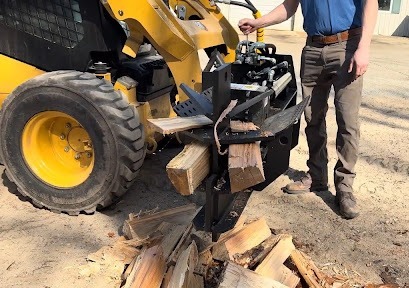
Since wood dries faster once it's cut to length and split, the date that matters most isn't when the tree came down, it's when the wood got split. A pile of rounds waiting on a free weekend isn't seasoning much.
For most people, splitting is the bottleneck. By hand or with a standalone splitter, it runs about half a cord to a cord a day, often with two people working. A season's supply can stretch across several weekends, and the last of it gets split months later than planned.
A Halverson firewood processor attaches to the skid steer, tractor, front loader or excavator already on the place. The HWP-120 picks up a log, cuts it to length, splits it and drops the firewood onto the pile at 1+ cords an hour, all from the safety and comfort of your skid steer or tractor’s cab. Hands never touch the saw, the splitter or the log. It's One Person, One Machine, with no helper on the log and no second machine to run. That's More Output, Less Time, Less Labor at the step that starts the drying clock, and a full season's wood can be split in a day.
For anyone who already cuts wood to block length, the HWP-135 splitter handles rounds up to 22 inches in diameter. If the physical side of splitting by hand is part of the problem, Heating With Wood? Give Your Body a Break covers what it takes out of you.
How to Stack Firewood So It Seasons
How firewood is stacked decides how much sun and wind actually reach it. Stacking firewood well comes down to a handful of rules:
- Get it off the ground. Rails, pallets or a pair of poles keep the bottom layer from pulling moisture up out of the soil.
- Stack single rows with space between them. A row one split deep dries much faster than a deep pile, and the gap between rows is where the air moves.
- Turn the long side toward the sun and the prevailing wind.
- Fit pieces snug within the row. Splits are irregular enough to leave air gaps on their own. Big gaps let the stack shift as the wood shrinks, and a stack that shifts eventually falls.
- Stack it plumb. A leaning stack will come down as it dries. Bracing buys time on a pile that's already being burned, not one with a year left to sit.
- Cross-stack the ends. Alternating pieces in pillars at each end holds the row steady without a rack.
- Put the bark up on uncovered rows so rain runs off instead of soaking in.
Round stacks like the Holzhausen dry well and look good, but they take time to build and don't make sense for five or six cords at a time.
How to Dry Firewood Fast
There's no real shortcut for firewood drying outdoors, but a few things speed it along. Split it smaller, since thinner pieces have less distance for moisture to travel. Give the stack full sun and open wind. Cover only the top so rain and snow stay off while the sides keep breathing.
For wood that has to be ready soon, cross-stack the whole pile, alternating the direction of each layer instead of just at the ends. Air moves through from every side, so it dries faster. It also takes more room and more time to build, so it's worth it for wood needed this season, not wood cut a year ahead.
Kiln-dried firewood gets under 20% in days, but that's a commercial process with heated chambers, and a backyard stack can't copy it.
Common Firewood Seasoning Mistakes
- Wrapping the whole stack in a tarp, which traps moisture and invites mold
- Stacking against a wall or fence, which blocks air on one side and puts insects and rodents next to the building
- Stacking on bare ground
- Leaving rounds unsplit and expecting them to season
- Leaving big gaps inside the row, so the stack shifts and falls as it dries
- Stacking out of plumb
- Taking a seller's word that wood is seasoned without checking it with a meter
How to Store Firewood Once It's Seasoned
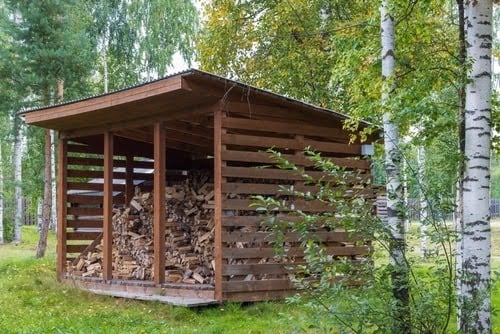
Once firewood is seasoned, the job changes from drying it to keeping it dry and close enough to use. The best way to store firewood is under a roof with open sides. A woodshed, lean-to or covered rack keeps rain and snow off and still lets air move through.
Storing Firewood Outside
Cover the top, leave the sides open and keep the bottom row off the ground, the same as during seasoning. Keep the stack well away from the house rather than against the siding, since a woodpile is a home for insects and mice and they'll move from one to the other. A small rack by the door for a few days' wood is fine, but the main supply belongs farther out.
Storing Firewood Indoors or in the Garage
Keep only a few days' supply inside. Firewood brings insects and the occasional mouse with it, and a big stack in a garage or basement brings in a lot of both. Wood stored indoors also stops drying in any useful way. Bring in what will burn in the next few days and leave the rest outside under cover.
How Many Cords of Wood for Winter?
A home heated with wood typically goes through 2-7 cords a year, depending on climate, the stove or boiler doing the work and the size and tightness of the house. Supplemental heat runs toward the low end. A shop, farm or outdoor boiler heating several buildings can burn well past that.
The simplest way to keep up is to always burn from the oldest pile. Most wood sits for 12-15 months before it's burned, and nobody has to track dates. That system only works if splitting keeps pace with burning. With One Person, One Machine, a year's supply is a day's work instead of a season of weekends. Heavier users heating more than one building may want the 2 cords an hour of the HWP-140B. Which Firewood Processor Is Right for You? walks through matching a processor to how much wood you burn.
Split a Full Season With One Person, One Machine
Dry firewood starts with getting it split early, and that's the step most people fall behind on. A Halverson firewood processor turns a pile of logs into split firewood with One Person, One Machine, From the Safety and Comfort of Your Host Machine's Cab. That means More Output, Less Time, Less Labor, right where the drying clock starts. See the full lineup on the Heating With Firewood page, or talk with our sales team about which processor fits your setup.
Frequently Asked Questions About Firewood Seasoning and Storage
Does firewood need to be covered?
The top does, but the sides don't. A cover keeps rain and snow from soaking the top layers, and open sides let the stack keep drying. Wood that's wrapped all the way around holds moisture and can mold.
Does firewood dry in winter?
Yes, but slowly. Winter air is often dry, and wind keeps moving moisture out, but drying slows significantly below freezing. Wood split in late fall makes some progress over the winter and picks up again in spring.
Can firewood be too dry?
Air-dried firewood rarely gets too dry because it levels off with the humidity around it. Very dry kiln-dried wood can burn fast and hot, so it's best to mix it with other wood or load it in smaller amounts.