
Ready to turn free wood into real profit?
Every summer, people start searching for firewood — and someone in your area is making good money selling it to them. If you have access to free or low-cost logs through tree work, land clearing or logging, you're already closer to a profitable firewood business than you might think.
The barrier to entry is low, the demand is consistent and with the right equipment, one person can process a serious volume of wood in a single day.
In this guide, we'll walk you through everything you need to start a firewood business from scratch, from building a simple business plan and choosing the right processing equipment to pricing your wood and finding customers. Whether you're looking to fill slow seasons with productive work or build a dedicated firewood operation, here's how to make it happen.
Why a Firewood Business Is a Profitable Side Income
If you’re looking for a stable source of secondary income, selling firewood can be a great option. The firewood market is sizeable; people will always need bundles of firewood for fire pits and home heating. With rising energy costs, many homeowners are choosing to heat with wood, and camping culture and home fire pits have only grown in popularity since the pandemic.
Getting into the firewood selling business is a natural fit for tree services, loggers, land clearers and farmers. If you’re already sitting on free or low-cost logs, you’re leaving money on the ground until you start processing them into firewood.
With a Halverson processor, you can turn that free wood into a steady, high-margin revenue stream.
Building Your Firewood Business Plan
Define Your Business Model
Before kicking off the business, think through these considerations:
- How and where will you sell the cords? Will you deliver them, or offer them for pickup on your property?
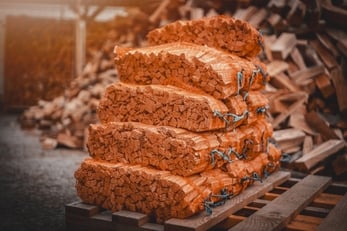
- Will you bundle for sale at gas stations, campgrounds or grocery stores? Bundled firewood sold through retail usually commands significantly higher per-unit margins than cord sales, though volume is lower.
- Will you offer mobile processing?
- Do you want to sell firewood wholesale to retailers, caterers or restaurants?
Know Your Costs
Generally, your manufacturing costs per logger’s cord equal your hourly rate plus the cost of running your skid steer. Here’s a more detailed breakdown:
- If you don’t already own equipment, you’ll need to factor in the costs associated with purchasing a processor or skid steer. A processor typically costs from $5,000 to $35,000, while a skid steer runs between $15,000 and $65,000.
- If the firewood isn’t free, you’ll need to determine a wood source and how much it’ll cost you. Buying logs in bulk from an arborist or logging company can cost up to $500 per full cord, though sometimes they offer the wood for free.
- If you’re storing the wood anywhere other than your property, you may need to pay a fee to the landowner. Freshly cut wood needs six to 12 months to season, so the wood will likely be “sitting around” for quite some time.
- If you’re offering delivery, labor for loading and unloading the truck, plus gas and mileage, should all be included. The IRS’s standard mileage rate for 2025 is 70 cents per mile, while gas prices fluctuate.
- Your investment is most likely subject to a write-off in the current tax year, which can lower your costs. Your tax preparer can confirm this.
Price Your Firewood to the Market
Every market is different. Pricing varies greatly by region, demand, seasoned vs. green wood, wood species mix and delivery distance. Customers tend to prefer white and red oak, beech, ash, maple and hickory, as these provide maximum heat and low smoke when properly seasoned. These types of wood can fetch higher prices than other, lower-quality wood.
Be sure to research your local market to make an informed decision on firewood prices. Currently, in Halverson’s home state of Minnesota, retail prices may look like:
| Face Cord | $150–$175 |
| Half Cord | $220–$260 |
| Full Cord | $325–$375 |
Revenue Projections
The return on investment for a firewood processing business is attractive, especially if you already own a skid steer, tractor or excavator and a truck to move the finished goods. When you invest in a commercial firewood processor, you can do more in less time with less labor, making your profit margins even more appealing.
Many Halverson customers routinely process up to 1.5 logger’s cords per hour with a single operator. This includes picking up the log, carrying it to where you want it stacked and splitting it, all from your host machine’s cab.
For example: If you can process 1.5 cords per hour and sell a full cord for $350, in 4 hours, you’ve made $2,100, not counting the expenses listed earlier.
Legal Considerations
Any business must operate within the law. We highly recommend consulting a lawyer before starting a business to ensure you’re fully compliant with local regulations. Here are a few examples of important considerations:
- Do you need a business license?
- Are you operating as a sole proprietorship or LLC?
- Is a state or county permit required?
- What about liability insurance?
- Are there firewood transportation laws (e.g., invasive species regulations, which are often significant)?
What Equipment Do You Need to Start a Firewood Business?
The Core Setup
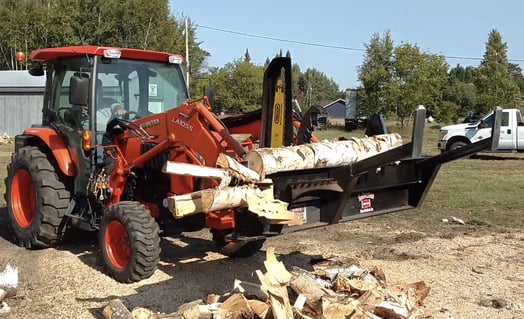
To start, you’ll need a skid steer, tractor or excavator. If you plan on transporting the firewood, a truck or multiple trucks are also necessary.
Why a Commercial Firewood Processor Changes the Math
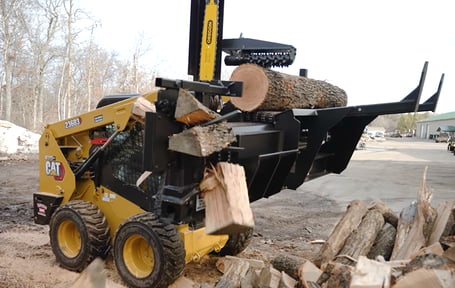
The most important upgrade is a firewood processor, like the ones proudly manufactured by Halverson. They help you process more wood, faster and safer, with less time and manpower required — basically supercharging your firewood operation.
Halverson processors perform three jobs: loading, cutting and splitting logs into firewood from the cab of the host unit. This significantly reduces fatigue and the risk of injuries common with manual splitting and chainsaw use. Halverson makes processors that can cut firewood to sizes ranging from 16” to 33”, from logs 8’ to 12’ long. If you need help finding the right processor for your needs, just reach out to our team.
What You Don't Need (Yet)
To start, you won’t need to invest in a sawmill, a permanent facility or a large crew. Many people in the firewood business only need themselves and their machinery. Consider making large investments after the business has proved itself, and you’re ready to make it your full-time job.
Where and How to Sell Firewood
Direct-to-Consumer
- Try Facebook Marketplace, Craigslist and Nextdoor for easy direct sales.
- Keep a firewood rack on your property to bring customers right to you (the downside, though, is that these racks often rely on the honor system).
- Target specific neighborhoods for door-to-door sales.
Retail & Wholesale Channels
- Sell your bundled firewood at gas stations, grocery stores, hardware stores and campgrounds.
- Work on building an ongoing relationship with local restaurants with fire features or pizza ovens.
Mobile Processing as a Premium Service
Bring your machine directly to any wood source to turn raw timber into finished firewood on-site. You can offer this as a premium service to those who need help clearing wood on their property or cleaning up after a storm.
Best Marketing Strategies for a Firewood Business
The most effective marketing is a mix of digital, local and word-of-mouth.
Digital Marketing Strategies
- Open a Google Business Profile to capture people searching "firewood near me" and similar terms.
- Promote your business on Facebook Marketplace and local Facebook groups.
- Don’t forget about Craigslist — it still works, especially in rural or suburban markets.
Local Marketing Strategies
- Post signs on windows and bulletin boards of local businesses — with permission, of course.
- Advertise in local newspapers and newsletters.
- Ask customers and friends to place yard signs advertising your business in their lawns.
- Sponsor local sports teams or charitable events and organizations.
Direct Marketing Strategies
- Firewood is a trust purchase, so reviews matter. Ask your customers to refer you to friends and family or post about their experience online. Consider offering referral incentives.
- Cultivate relationships with your customers. If they have a good experience, they may become repeat customers or even establish a regular purchasing schedule.
Seasonality plays a part in the firewood business, too. Ramp up your marketing efforts in the summer and fall so you’re top of mind when customers need wood.
How to Scale Your Firewood Business Over Time
Your firewood business can start small and scale easily. Investment is minimal, and our customers find that it’s a great starter business for those looking to make extra money or learn how to run a business.
Once your business has gained traction, you can scale it by building inventory in the off-season. You’ll need to determine how to store it, as storage affects quality and price. Store it somewhere cool, dry and well-ventilated, such as outdoors, wrapped in a tarp and not sitting directly on the ground. Doing so will allow it to dry out, resulting in a better product for your customers and a higher price.
Consider adding a second machine or operator to multiply your output. A large firewood operation can keep quality workers employed year-round, producing during the downtime and the off-season, so you’re always fully stocked. And ramping up your marketing efforts will help ensure you have plenty of business by the next firewood season.
Ready to Start Your Firewood Business?
 You can start a successful firewood business with low startup costs, strong return on investment and equipment you already own. With access to free or inexpensive wood, you can turn downtime into income while providing a renewable, in-demand heating product.
A Halverson processor is the tool that makes the business viable at scale. Request a quote and we’ll help you find the right processor for your volume, or check out our full processor lineup and see the machines in action.